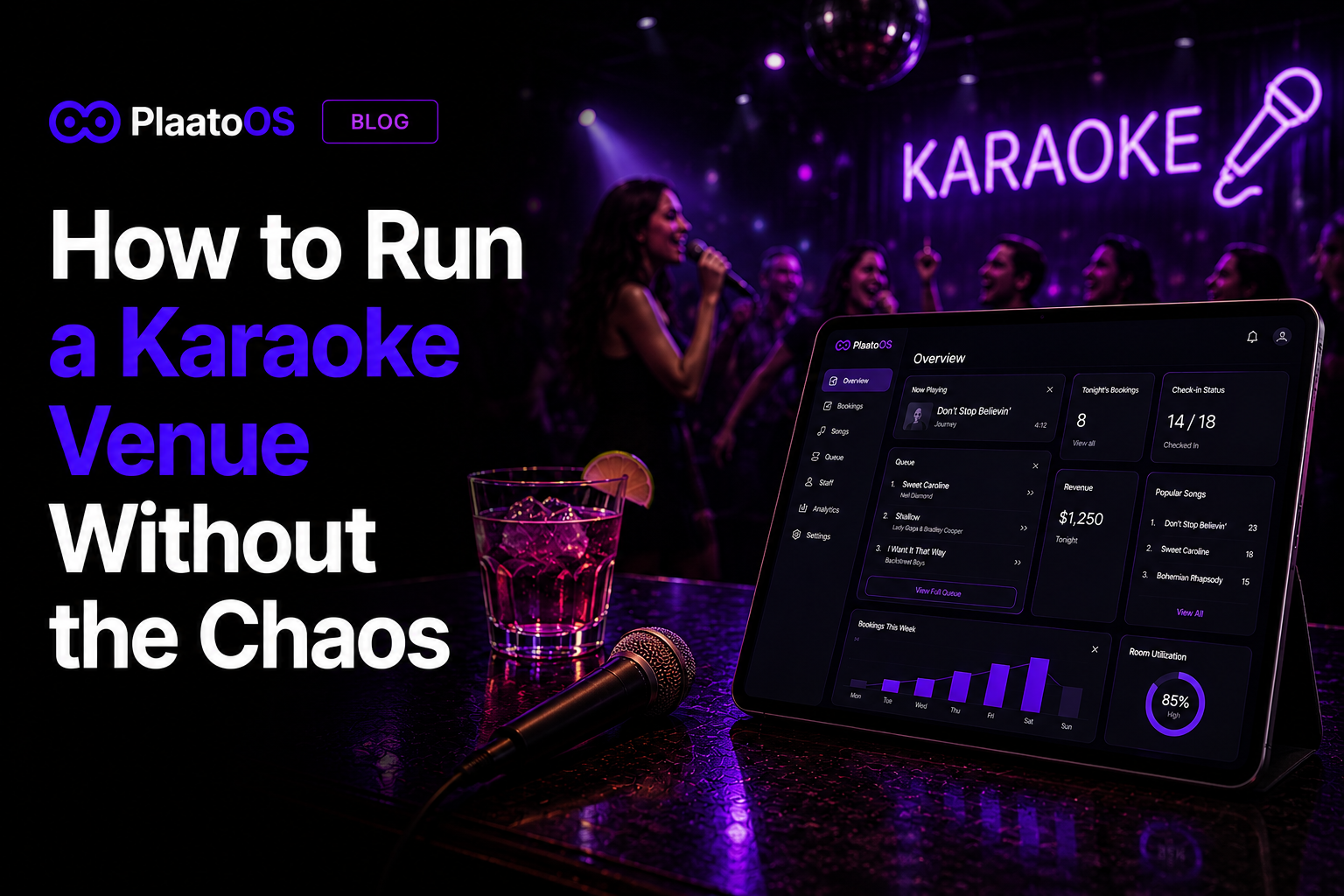
Done wrong, it's one of the most operationally chaotic nights of the week. Paper queues that get lost. Double-booked rooms. Frustrated guests who've been waiting for forty minutes with no update. Staff fielding complaints instead of serving drinks.
The difference between a karaoke night that prints money and one that burns out your team isn't the music selection. It's the management system behind it.
The 3 biggest operational problems in karaoke venues
1. Queue chaos
Without a digital queue, someone has to physically manage who's next. That usually means a piece of paper at the bar, a staff member spending half their time on queue management, and customers who feel like they're being skipped even when they're not.
The moment the queue feels unfair, the atmosphere turns. People stop ordering drinks and start watching the list.
2. Room management
Karaoke rooms create a unique scheduling challenge. You have a fixed number of rooms, variable booking lengths, and customers who want to extend — often at peak times when you need the room for the next group.
Without a system, staff are running between rooms, knocking on doors, making judgment calls in real time. It's stressful, it's inconsistent, and it leads to disputes.
3. No-shows on bookings
Karaoke rooms are often booked informally — a DM, a phone call, a name on a paper list. When groups don't show, you're left with an empty room on a Friday night with a queue of walk-ins you turned away.
Why karaoke is worth fixing
Before we get to the solution, it's worth saying plainly: karaoke is worth the investment to get right.
Groups who book karaoke rooms arrive together, stay for two to three hours on average, and spend significantly more per head than general admission customers. They celebrate birthdays, work events, and milestone nights — occasions where people spend freely.
The venues that run karaoke well create some of the strongest loyalty of any format. People find their spot, they come back for every occasion, and they bring new groups every time.
Getting the operations right isn't just about reducing stress. It's about unlocking the full revenue potential of one of hospitality's highest-margin formats.
How PlaatoOS manages your karaoke night
PlaatoOS was built with karaoke venues specifically in mind. Here's what it handles:
Digital queue management Customers add themselves to the queue from their phone or at a kiosk. The queue is visible on screen — transparent, fair, and managed without a single piece of paper. Staff spend their time serving, not managing lists.
Room booking system Rooms can be booked in advance through your PlaatoOS event page. Bookings include automatic confirmations, reminders, and deposit collection if you want it. Walk-in room allocation is managed from the same dashboard.
Session management When a room session is ending, your staff gets a notification. Extension requests go through the system, not through a knock on the door. Everything is tracked — start time, end time, revenue per room per night.
Integrated with tickets and loyalty Karaoke nights can include ticket-based entry, loyalty stamps for room bookings, and upsell options (drinks packages, song credits) that customers can add before they arrive.
Setting up your first managed karaoke night: step by step
Step 1 — Log in to app.plaatoos.com and enable the Karaoke module.
Step 2 — Add your rooms: name each room, set capacity, and define your session lengths (60 min, 90 min, 120 min).
Step 3 — Set up your booking page. This is the link you share when people ask how to book. It shows available rooms and times in real time.
Step 4 — Configure your queue display. This can run on any screen in your venue — a tablet at the bar, a TV on the wall, or a monitor at the entrance.
Step 5 — Go live. Share your booking link on Instagram and WhatsApp. Let the system run the queue. Use your staff for what they're actually there for.
Your next karaoke night doesn't have to be chaotic. Run it properly from the start — free at plaatoos.com.